
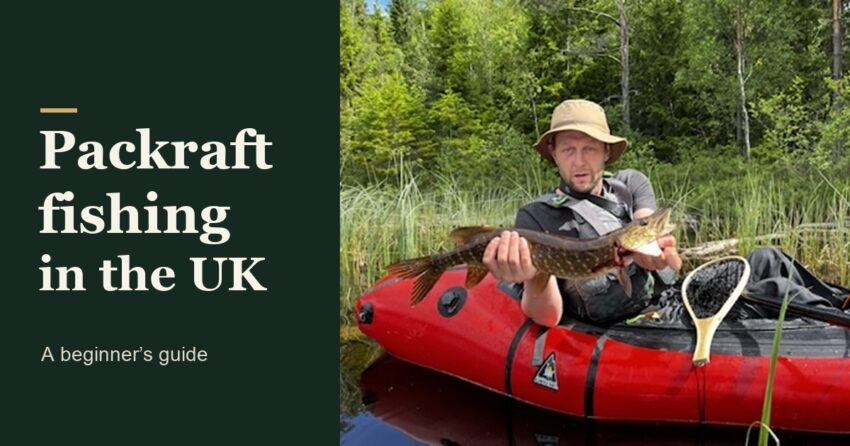
Packraft fishing in the UK opens up waters you’d struggle to reach with a kayak on a roof rack. A packraft rolls up to the size of a sleeping bag and weighs only a few kilos, so you can carry it to a hill loch an hour’s walk from the road, paddle to the far bank of a reservoir or fish a slow lowland river where the banks are too overgrown to cast from.
Once you’ve decided where to go, a fishing app such as Fishbox can help you plan your trip from home with depth maps, wind forecasts and bite forecasts for the water you have in mind.
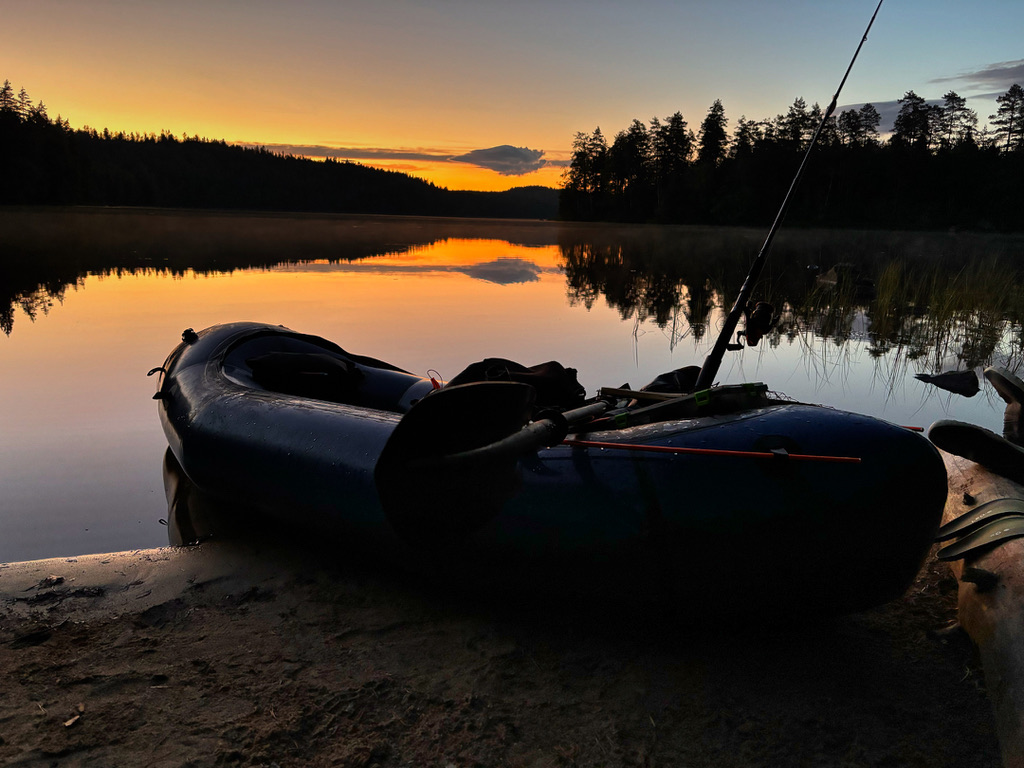
Here’s how to set up a packraft for fishing, what to take, where you can go and how to stay safe on cold water.
Choose a Packraft That Packraft Fishing In The UK
Not every packraft makes a good fishing platform. Look for the following.
- Stability. A wider, longer boat feels steadier when you lean over to land a fish. Ultralight white-water models can feel twitchy when you shift your weight.
- A firm seat and floor. A higher inflatable seat makes casting easier and keeps you out of the puddle that collects in the bottom.
- Tie-down points. D-rings or loops on the tubes let you secure a rod holder, a dry bag and a landing net.
- A tough floor. Hooks, rocks and gravel banks all take their toll. A heavier floor fabric is worth the extra weight.
If you’re still choosing a boat, start with our round-up of the best packrafts of 2026
Keep the Tackle Short and Simple
Space is tight, and a long rod is awkward to handle when you’re sitting so low on the water. A multi-piece travel rod of around 6–7 ft fits in a rucksack and is easier to manage from the boat. Travel rods from Rigged and Ready are one option. A small spinning reel is a good match, or you could take a light fly-fishing outfit.
Take a small tackle box with a few lures suited to the water you’re fishing. For trout and perch on small waters, a few spinners, small spoons and soft plastics will cover most situations. For pike, take a handful of larger soft lures and a wire trace. Pack forceps, a short-handled rubber landing net, line snips and a rod tether so a fumbled cast doesn’t send your rod to the bottom.
Keep hooks clear of the tubes. Secure your lure to the hook keeper when you’re moving and unhook fish over the landing net.
Rig the Boat Before You Launch
Sort your kit on the bank. Stow your phone and a spare layer in a dry bag behind the seat, keep the rod holder within reach and put the paddle where you can grab it as soon as the wind picks up.
Practise switching between paddle and rod in shallow water before you head out. A few goes should make the changeover feel less awkward.
Packraft Fishing in the UK and Where You Can Go
Check both fishing and paddling permissions before you set off.
- A licence or permit to fish. In England and Wales, you need a rod licence for freshwater fishing and permission from whoever holds the fishing rights. Scotland has no rod licence, though most trout and salmon waters still require a permit. Northern Ireland has its own licences and permits. Sea fishing from the coast does not require a rod licence.
- Permission to paddle. Many canals and navigable rivers require a waterways licence. Paddle UK membership covers many of these waterways. Some reservoirs and private lakes ban boats or only allow them by arrangement, so check with the owner first.
Scottish lochs can be a good place to start because paddling access is generally broad. Check the fishing permit requirements for the loch you have in mind.
Stay Safe on Cold Water
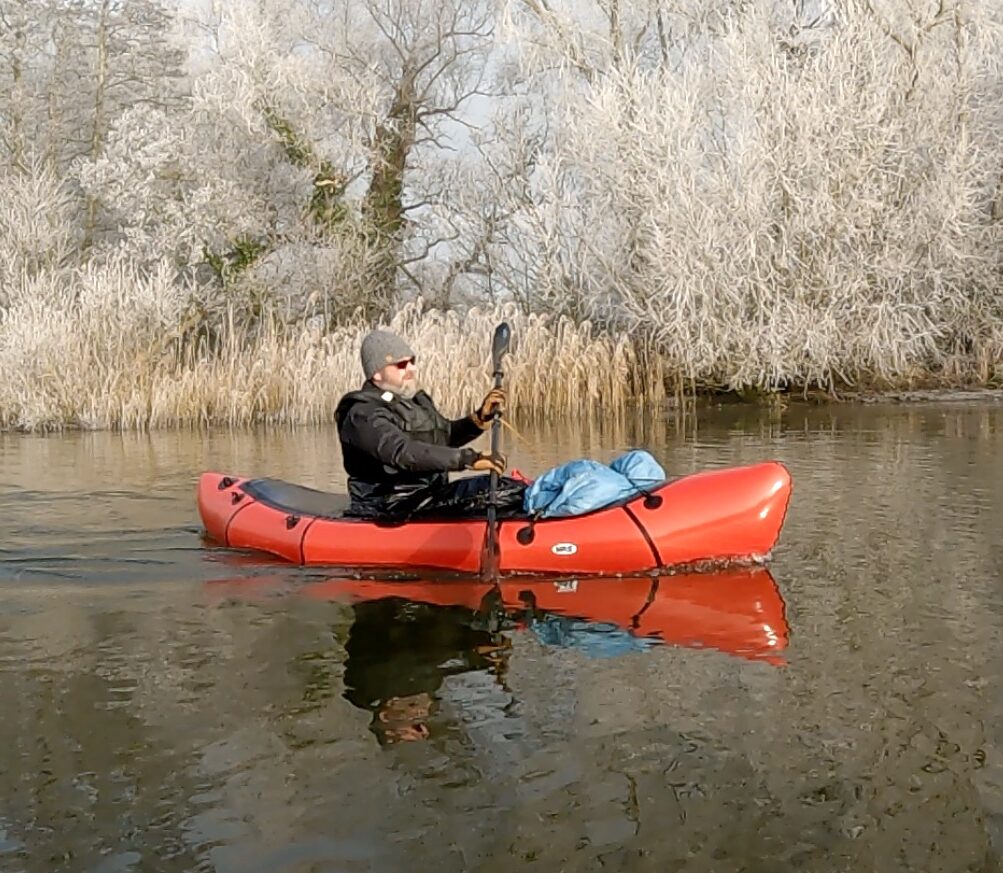
British waters are cold for much of the year, and a packraft sits low in the water. Wear a properly fastened buoyancy aid and dress for the water temperature in case you fall in. A light boat can drift quickly when the wind picks up, so stay close to the bank and turn back early if conditions worsen. Tell someone where you’re going and when you expect to be back.
Plan the Trip, Then Fish It Slowly
When planning a day of packraft fishing in the UK, check the wind forecast for the water you’ll be fishing. If you have a depth map, look for drop-offs, weed beds and points where fish are likely to hold. Mark a few spots and note which bank will offer shelter from the forecast wind.
Once you’re on the water, try the edges and drop-offs first. In a light breeze, you can drift slowly along a likely stretch and cover more water as you cast. For inspiration, read about our packrafting and fishing trip in Sweden.
Frequently Asked Questions about packraft fishing in the UK
Yes. A wide, stable packraft with a firm seat and tie-down points makes a good fishing platform on lakes, lochs and slow rivers. Keep hooks clear of the inflatable tubes.
In England and Wales, you need a rod licence for freshwater fishing and permission from whoever holds the fishing rights. Scotland has no rod licence, though most trout and salmon waters still require a permit. Northern Ireland has its own licensing rules. Depending on where you go, you may also need a separate waterways licence to paddle.
A short, multi-piece travel rod of around 6–7 ft is a good starting point. It packs into a rucksack and is easier to cast with and land fish on when you’re sitting low on the water.
